Childbirth Without Fear : The principles and practice of natural childbirth
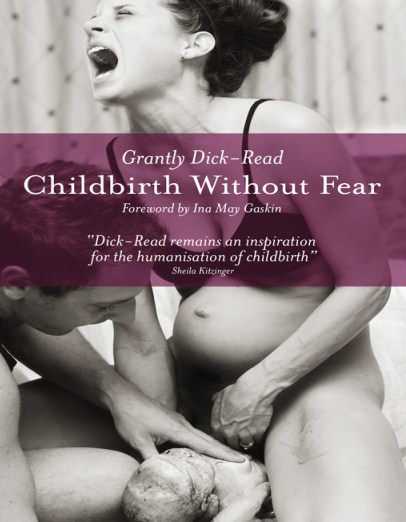
I had no idea when I first read Childbirth Without Fear at the tender age of
sixteen that the book would set the course of my life to an extent that is
only obvious to me now. I found the book in the public library in my
hometown and began what became a lifelong study of birth. Birth was a
fascinating and mysterious subject at that time in my sheltered life, and this
was the only book I could find about it. The edition I read had no photos,
but it prepared me for birth and, amazingly, it prepared me to be a midwife
in so many ways that it’s hard to list them all.
Grantly Dick-Read’s description of birth as a biological process, the
functioning of which goes best when the labouring woman is calm and
unafraid, made sense to me, because it matched all of the stories that I had
overheard during the summer I spent at my aunt and uncle’s farm when I
was nine. In case you don’t already know this, family farmers talk about
birth a lot. My aunt took care to school me on the principles of mammalian
birth, principles that my cousins had learned at a much earlier age. Even
though I never had a chance to be around a labouring animal or see any
kind of birth or pictorial representation of birth in any species, I quickly
learned that it is inexcusable behaviour to frighten or bother a labouring
female. I also learned how easy it is to unintentionally cause complications
in birth in this way.